Dev log
Ironward is a work in progress, and everything here may still change.
Stone that looks like stone, and a game that updates itself
Towers got real surfaces: mortar courses, planks with grain, overlapping shingles and worn edges. Ground types now bleed into each other instead of stepping. The game downloads its own updates, shows this log on the title screen and counts along with everyone, down to how often you click on nothing.
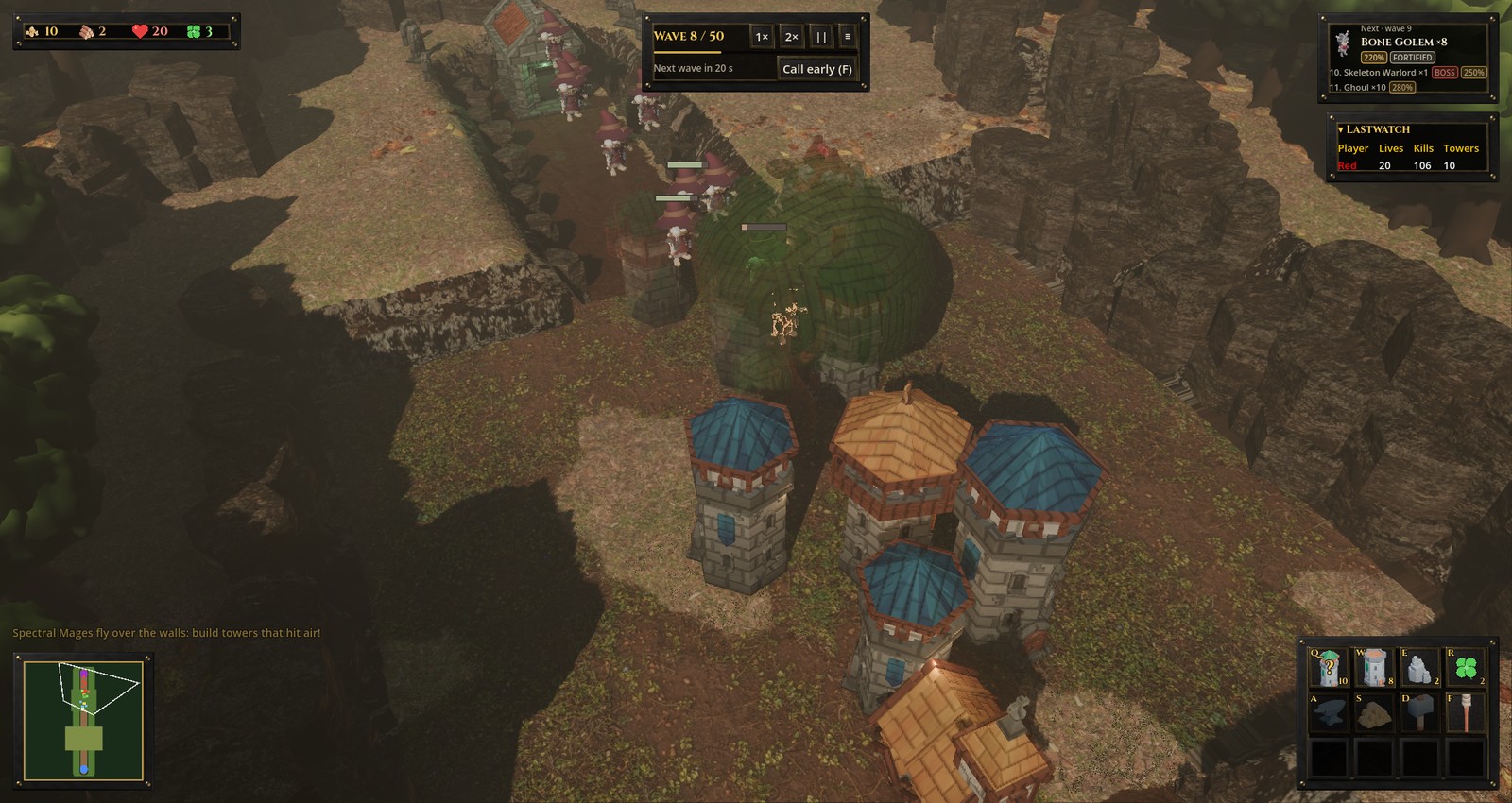
Signs on real chains, and this page
The title screen's signs are now 3D objects hanging on simulated chains: click one and it swings back into the picture. Map scripts got events with objects, and the server now counts what happens on it.
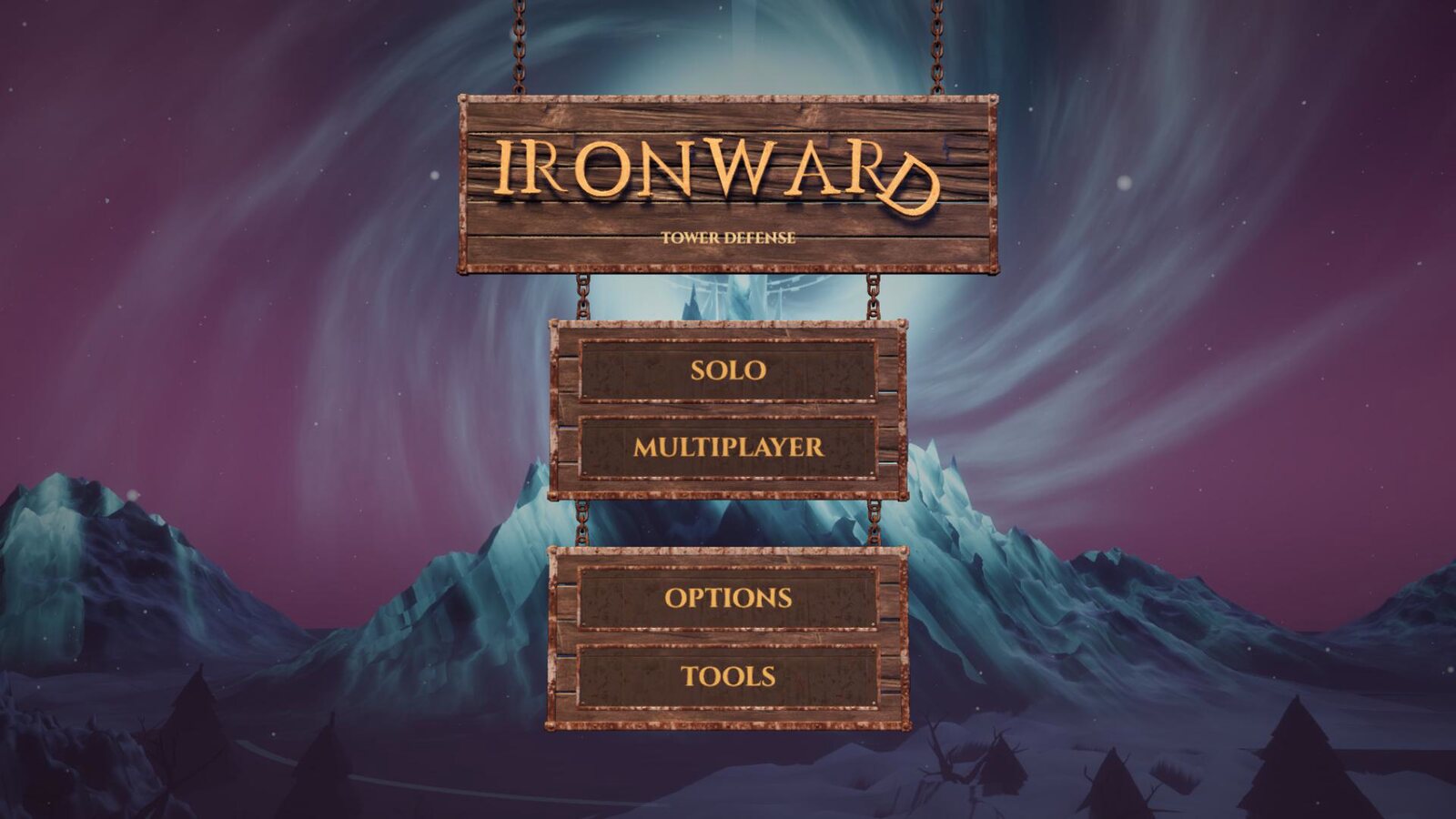
Our own trees
Oaks, pines and dead trees generated in Blender replace the placeholders, and winter maps put snow on whatever faces up.
Lobby, friends and accounts
A proper game lobby, a server browser with channel chat, passwords and invite links, rematches, and accounts with friends. The frames and buttons are rendered in Blender.
Fifty waves and a map editor
Five acts, creeps that regenerate, turn invisible, split and summon, tower upgrades as a gold sink, and endless mode. The map editor went from the first slice to object data and New map in one day.
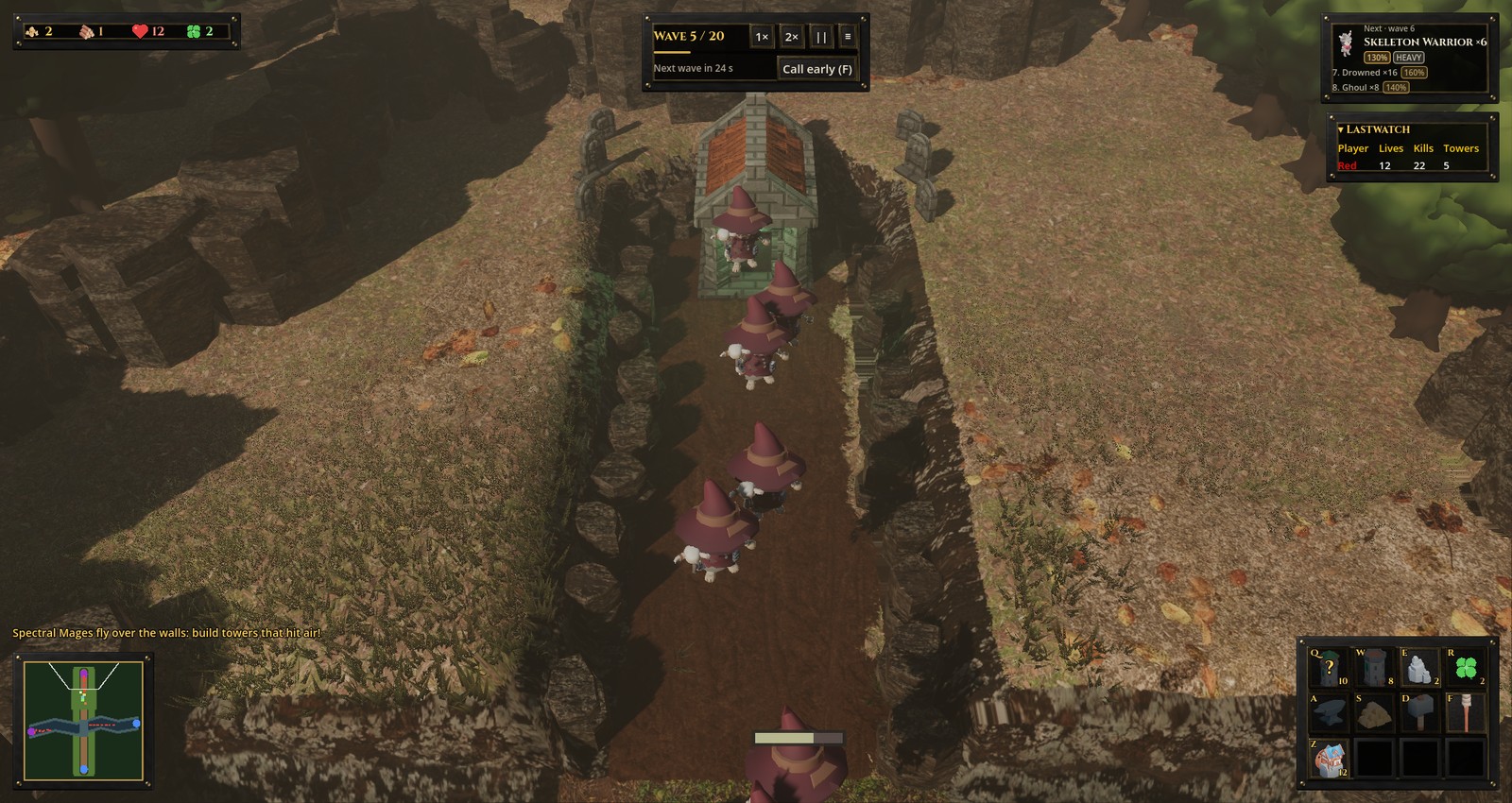
Playing together
Lockstep co-op with a lobby, replays and a dedicated server, the first four-lane map with a shared centre, sandboxed Lua map scripts, and towers that rise out of scaffolding to the sound of hammers.
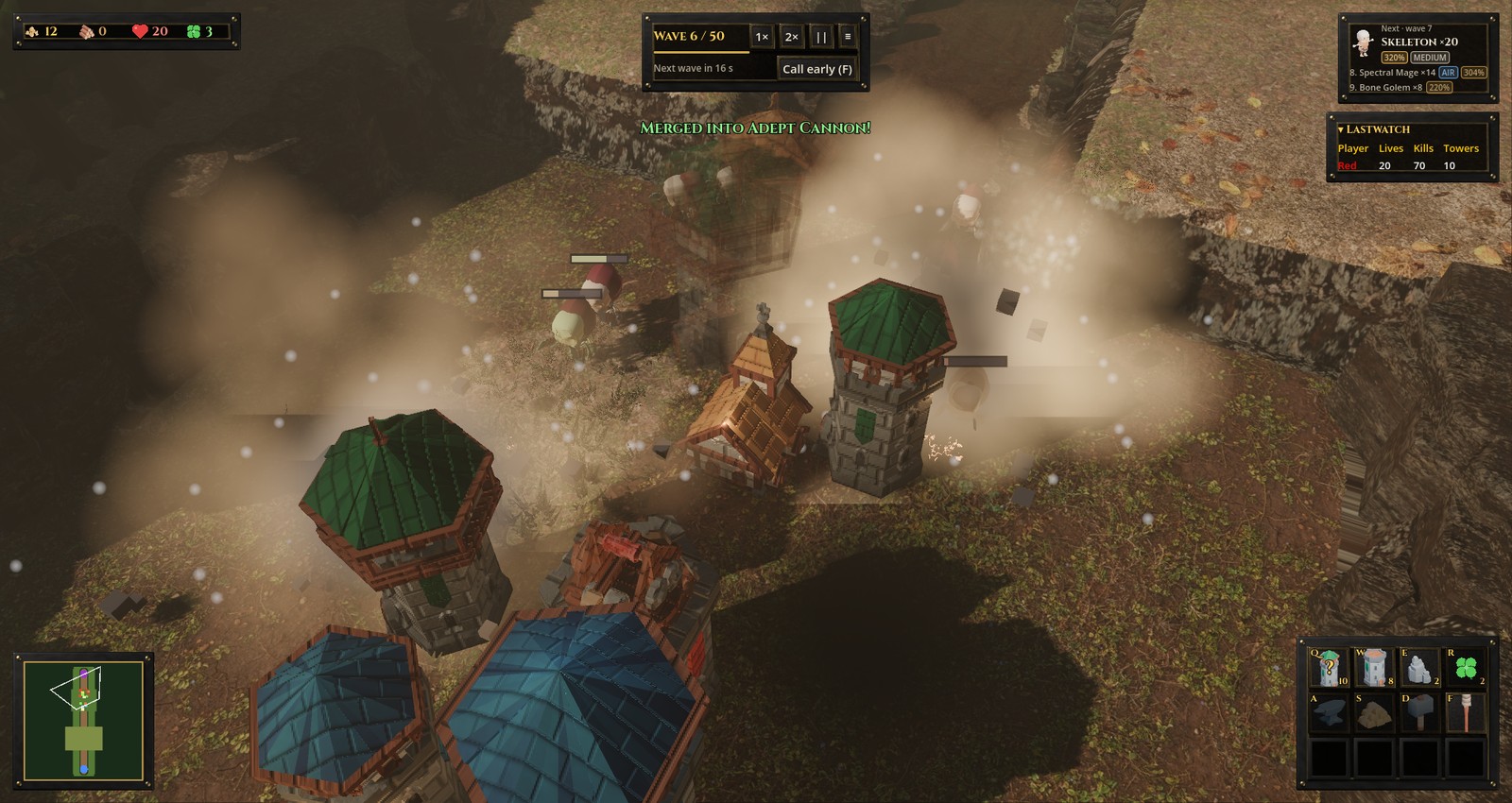
Twenty thousand skeletons, one simulation
First the question of whether crowds of animated creeps would run at all: 20,000 at 53 frames a second. Then a deterministic simulation, and the first version of Lastwatch on top of it.
A plan first
Eleven rounds of planning, and one goal written at the top: the hunt through open lobbies, the chat before the game, and the rush of still standing while the others fall.